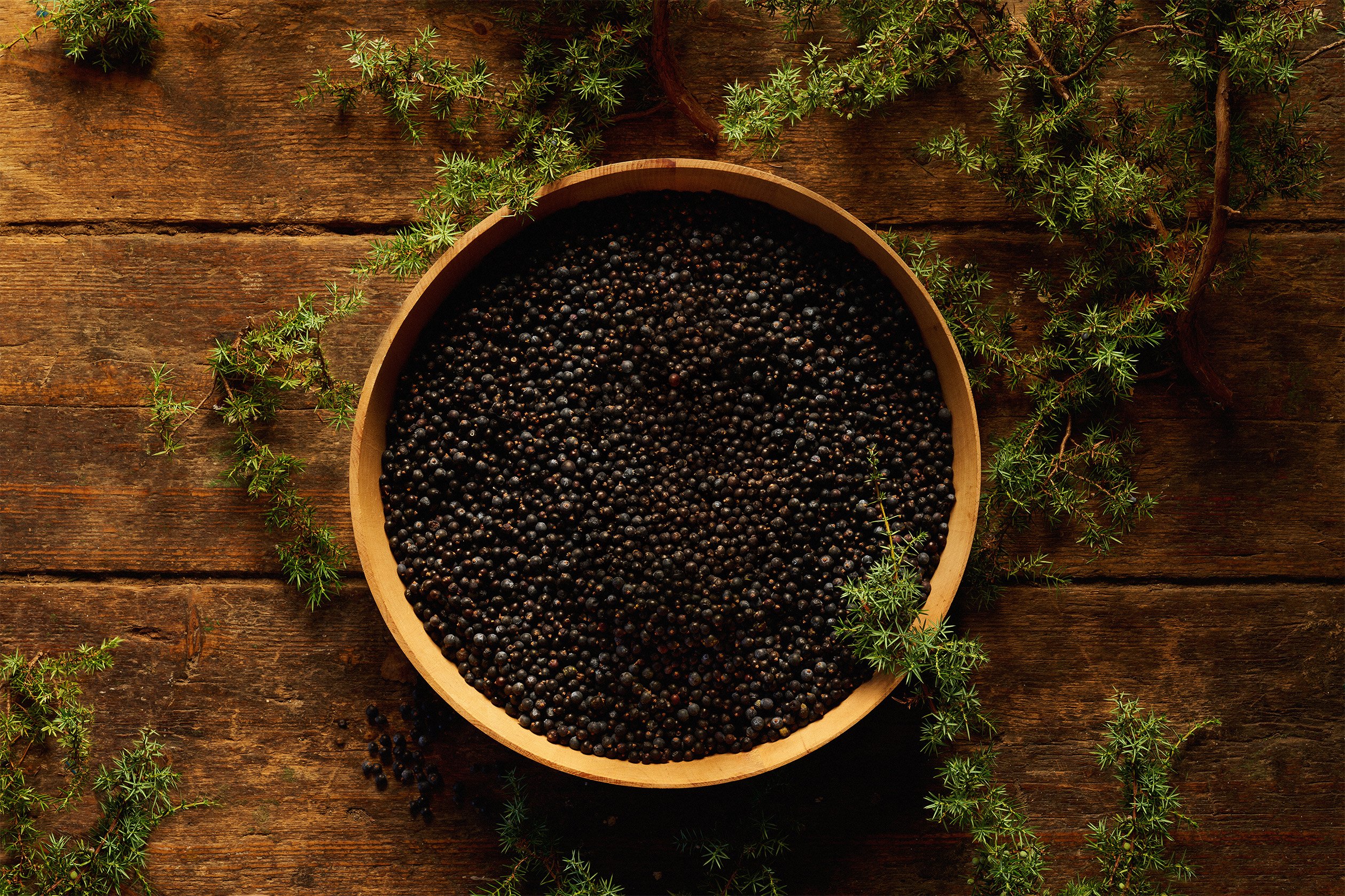
Juniper : “Only Sweden has Swedish juniper berries.”
The heading is borrowed, and reworked, from the poem “Om svenska rim” (On Swedish rhymes), which Carl Jonas Love Almqvist wrote during his exile in the 19th century. In the original he wrote about Swedish gooseberries – in a mix of humour and homesickness he celebrates the Nordic and the Swedish in contrast to exotic fruits and countries in other parts of the world. The feeling he conveys captures how we thought when we set out to create something unique and local – we wanted to offer a familiar product with a character entirely its own, on a par with the best in the world.
Production
Origin
The craft of the juniper berry
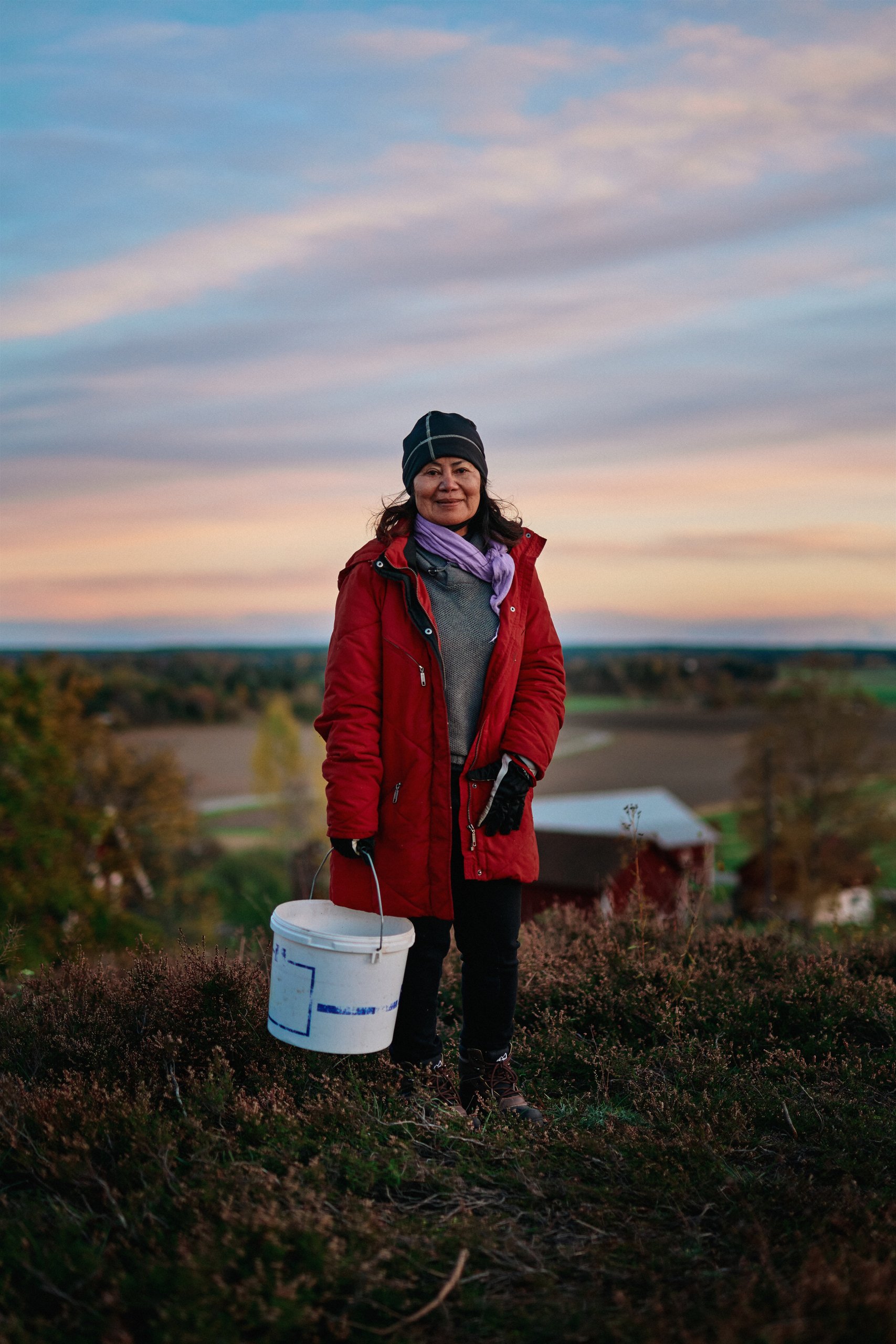
Swedish juniper berries could not be found anywhere, and had probably not been picked on a large scale in Sweden for many decades, most likely for reasons of cost – until we took up this forgotten Swedish ingredient again. In the first years we picked them ourselves, learning how to find the bushes, get permission to pick and what the berry season looks like. Through notices and personal contacts, local pensioners and landowners became part of a growing network – and we have finally added semi-professional pickers who help us when the season is at its busiest.
Early in the season the berries sit tight and are best picked with supple leather gloves; later they come away from the branch more and more easily, until they are more or less dried on the branch and fall to the ground at the slightest touch. At the start of the season you pick almost nothing but berries, though it takes more time. Towards the end the berries come loose quickly and easily – but you get more needles and twigs with them, and instead spend more time cleaning them out so that only the berries remain.
There is a feeling that a body of knowledge, a craft (of cleaning, drying and packing), has come back to life.
Flavour profile
The Swedish juniper berry – straightforward and simple
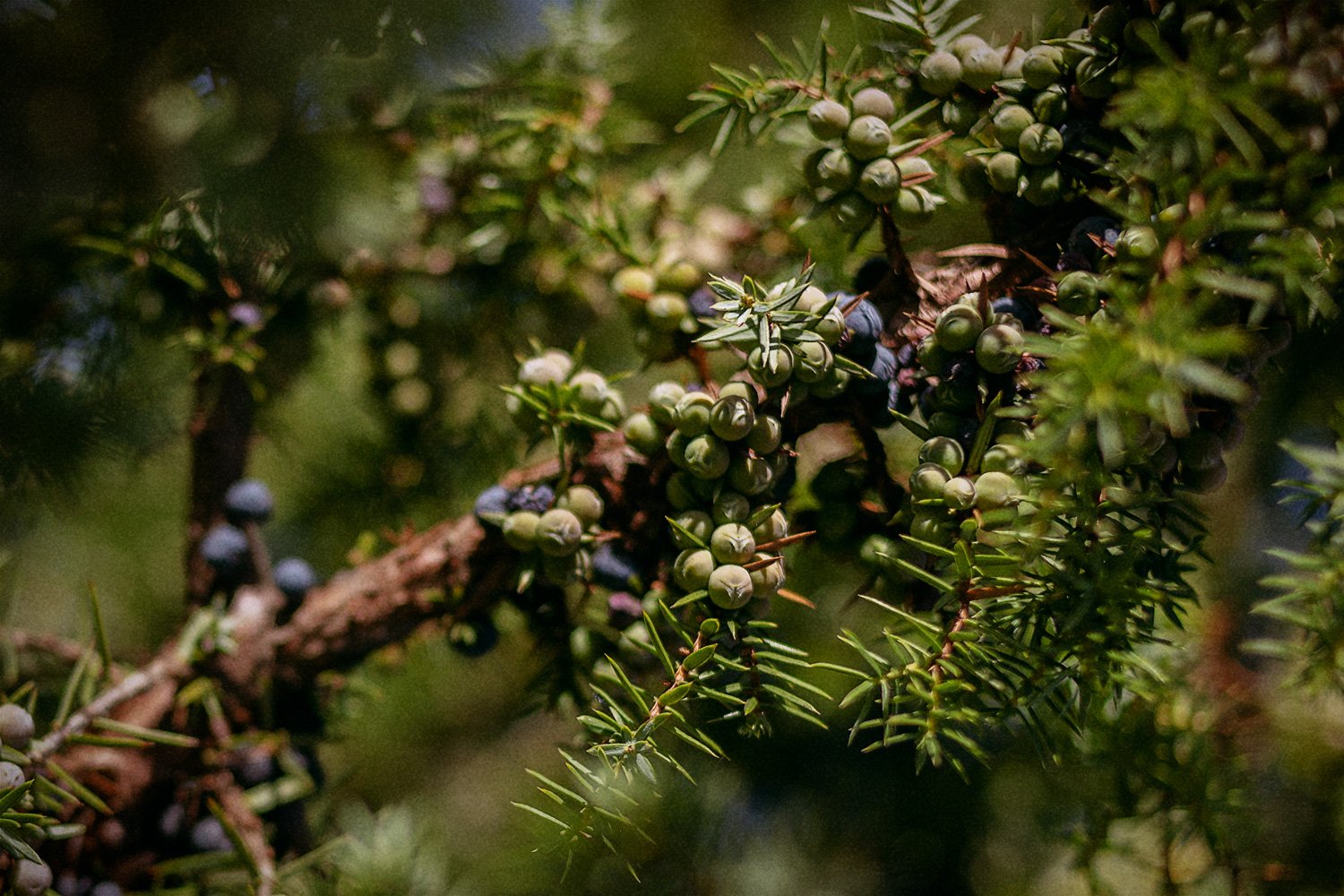
We have learned peculiarities such as the fact that only female junipers bear fruit, while the male plants have none. And that the berries grow over two seasons – in the first year they are green and tart, and in the second they ripen and take on their characteristic blue-purple-black colour, as the tarter citrus notes fade and the oilier aroma develops and takes over.
Drink recipes
Related recipes
Drink recipes with Juniper
These recipes feature this ingredient – explore them and give them a try!

More ingredients
-

Wheat
The wheat is grown organically by the Weidman family on the neighbouring farm, Flassbro. Together we have experimented with wheat varieties, which – somewhat surprisingly – have played a very important part in the flavour profile of the final product. The current product uses spring wheat.
-

Coriander
Swedish-grown coriander seed is an important contributor to the classic gin character.
-

Rhubarb
The rhubarb has been grown and harvested on our own farm in Bråhovda – without pesticides or artificial fertiliser, of course.
-

Mint
The mint is harvested and used fresh when we flavour our gin. It is an important part of the freshness in a Nordic gin produced entirely without citrus.
-

Lingonberry
Lingonberries from the forests of Sörmland add a tart yet rounded note that strengthens the gin and brings Nordic nature to mind.
-

Yarrow
Yarrow grows wild in Sörmland. It is dried gently and gives a subtle herbal note with hints of summer flowers.